
Specialised Dry Ice Blasting
Controlled dry ice blasting for suitable industrial equipment and surfaces where a low-residue cleaning process can reduce added water and secondary blasting media.
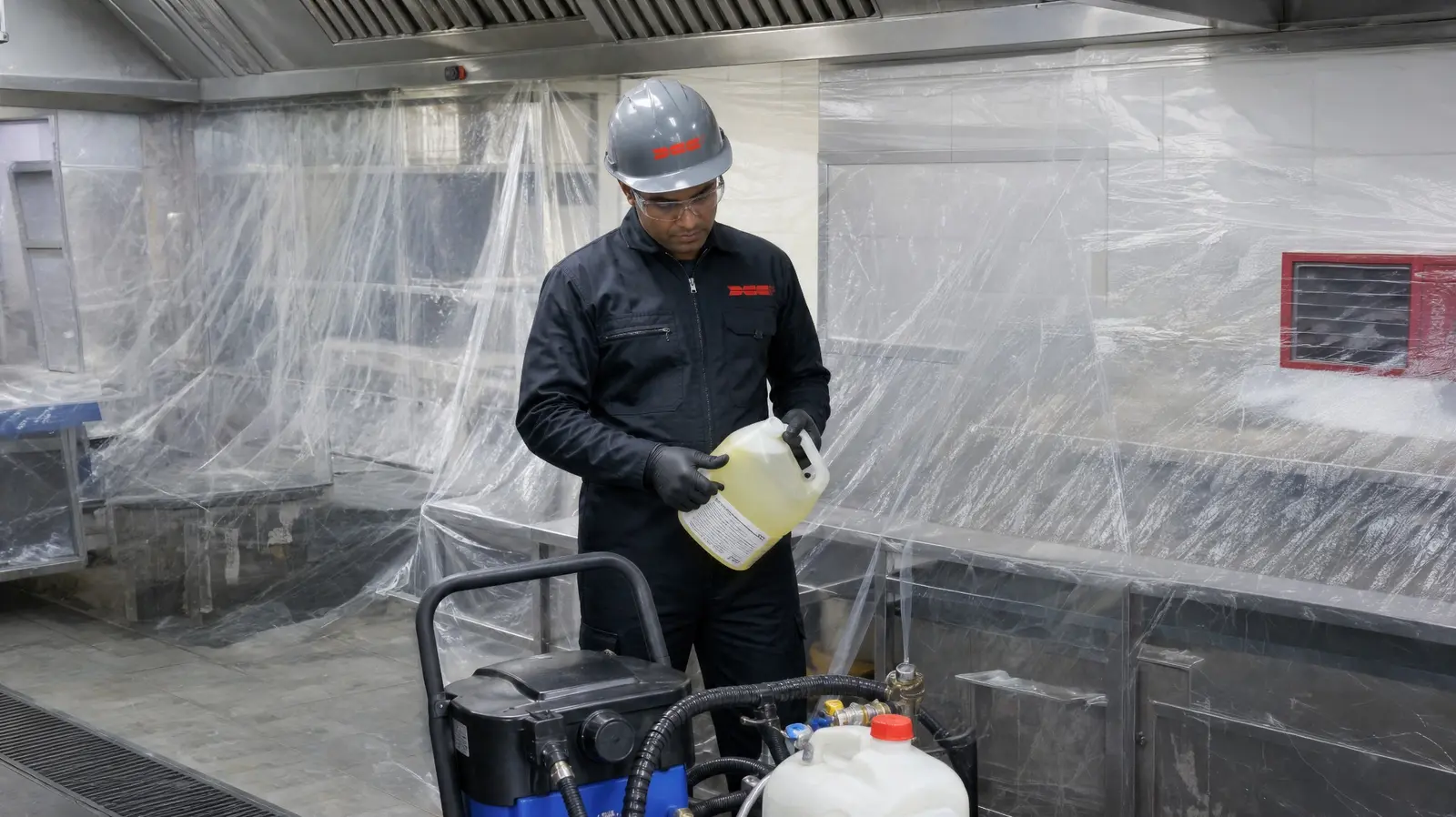
Survey the access. Select the method. Plan the work.
Real site conditions determine the equipment, protection, work zones and evidence required for a responsible specialist service.
Remove suitable surface contamination from an agreed asset or area while protecting the substrate, controlling the work zone and documenting the result.
The scope begins with the system condition, configuration and operational requirements. The survey defines what can be accessed, which method is suitable and how completion will be recorded.
When to arrange an inspection
- Deposits on suitable production or engineering equipment
- A need to limit added water during cleaning
- Complex surfaces that require a controlled test area
- A requirement to reduce secondary blasting media
What may be covered and what you can receive.
System components
- Suitability review of the substrate and contaminant
- Test patch before the production cleaning scope
- Compressed-air supply, isolation and work-zone controls
- Collection of dislodged contamination and final inspection
Service records
- Pre-work suitability and access record
- Approved test-area observation
- Visual completion evidence
- Service record with limitations and follow-up notes
The method must suit the actual asset and contaminant.
Dry ice particles are propelled by compressed air and sublimate after impact. The process still releases removed contamination and carbon dioxide gas, so ventilation, atmosphere monitoring where required, hearing protection, isolation and substrate testing must be planned before work.
Technical basis: dry ice is propelled with compressed air and sublimates on impact; the removed contamination still requires collection, and carbon dioxide exposure must be controlled.
Read about standards and documentation →Execution sequence
- Assess
- Test
- Blast
- Verify
Important points before approval.
Does dry ice blasting leave blasting media behind?+
The dry ice sublimates into carbon dioxide gas. Material removed from the surface still remains and must be captured, vacuumed or otherwise managed as part of the work plan.
Is dry ice blasting suitable for every surface?+
No. Suitability depends on the substrate, coating, contaminant, equipment condition and the required finish. DCC uses a controlled test area before approving the wider scope.
Why are ventilation and work-zone controls important?+
Dry ice becomes carbon dioxide gas. The work plan must prevent unsafe accumulation and control noise, dislodged contamination, access and interaction with nearby operations.